
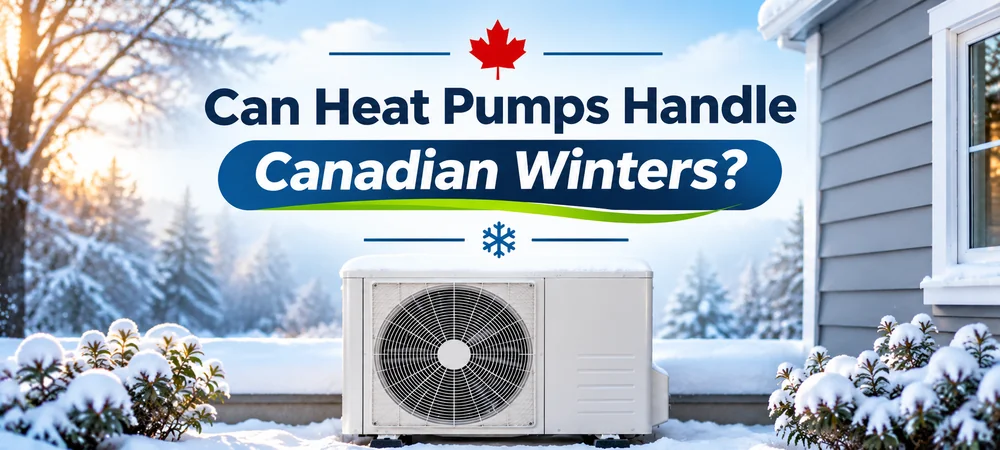
Canadian winters can bring freezing temperatures, strong winds and extended periods of below-zero weather. So, it is reasonable to wonder whether a heat pump can keep a home comfortable when temperatures drop well below freezing. The answer is yes: modern cold-climate heat pumps are designed to provide reliable heating in cold conditions, including many of the winter temperatures experienced across Ontario. However, the equipment you choose, how it is sized and whether your home needs backup heating all make a difference.
How Modern Heat Pumps Work in Cold Canadian Weather
A heat pump does not generate heat in the same way as a traditional furnace. Instead, it transfers heat from one place to another. During winter, an air-source heat pump extracts available heat energy from outdoor air and transfers it inside your home.
Even when outdoor temperatures are below freezing, the air still contains thermal energy. The system uses a refrigerant circuit and compressor to absorb that energy and deliver it indoors at a useful temperature.
When summer arrives, the process reverses. The same equipment can remove heat from inside your home and release it outdoors, providing air conditioning.
This ability to provide both heating and cooling makes heat pumps a practical year-round HVAC option for many Canadian properties.
Can Heat Pumps Handle Canadian Winters at -20°C or -30°C?
Yes, certain cold-climate heat pumps can continue operating at temperatures as low as -30°C. These systems are specifically designed for colder conditions and are different from older or standard air-source heat pumps that may lose heating capacity more quickly as outdoor temperatures fall.
However, not every heat pump has the same low-temperature performance. The minimum operating temperature, available heating capacity and efficiency vary by manufacturer and model.
What happens as the temperature drops?
A heat pump generally has to work harder as the outdoor temperature falls. Its heating capacity and efficiency can decrease, although modern cold-climate models are designed to maintain useful heating output at much lower temperatures than conventional systems.
- Above freezing: A properly selected heat pump can usually provide heating efficiently without requiring much supplemental heat.
- Around -10°C to -15°C: The system may need to work harder, and its heating output will depend on the specific model.
- Around -20°C: A suitable cold-climate model can continue heating, but its available capacity and efficiency should be checked at this temperature.
- Around -25°C to -30°C: Some cold-climate models are designed to operate in this range. Supplemental heating may still be needed depending on the building’s heat loss and the equipment’s capacity.
Natural Resources Canada explains that cold-climate air-source heat pumps can operate at temperatures as low as -30°C. This does not mean every model will deliver its full rated heating capacity at that temperature. Always check the manufacturer’s performance data for the exact equipment being considered.
Why Cold-Climate Heat Pumps Are Different
Cold-climate heat pumps use equipment and controls designed to maintain heating performance in lower outdoor temperatures. They are a better choice for Canadian winters than selecting a conventional heat pump based only on its cooling capacity.
Variable-speed compressor technology
Many cold-climate systems use inverter-driven, variable-speed compressors. Rather than simply switching between full output and no output, the compressor can adjust its speed to match the heating demand. This helps the system maintain indoor comfort during changing weather conditions and operate more smoothly during milder periods.
Improved heat exchangers and refrigerant controls
Cold-climate models are engineered to extract heat from colder outdoor air. Their heat exchangers, refrigerant circuits and operating controls are designed to support heating performance when temperatures fall.
Automatic defrost operation
In cold and damp weather, frost can build up on the outdoor coil. This is a normal part of heat pump operation. The system periodically enters a defrost cycle to remove accumulated frost and maintain heat transfer.
During defrost, the outdoor fan may stop temporarily and you may notice water, vapour or a brief change in the sound of the unit. These can be normal operating conditions. However, heavy ice that remains on the outdoor unit or repeatedly prevents normal operation should be inspected by an HVAC technician.
Do Heat Pumps Need Backup Heating in Ontario?
Not every heat pump installation requires the same backup arrangement. Some properly designed cold-climate systems can meet most or all of a home’s heating demand under local winter design conditions. Other installations use a supplemental heating source for particularly cold weather or when the heat pump cannot meet the building’s full heating load.
For many Ontario homeowners, a dual-fuel or hybrid system is worth considering. It combines an electric heat pump with a gas furnace. The heat pump handles heating when conditions are suitable, while the furnace can provide additional heat when needed.
Common backup heating options
- Existing gas furnace: A compatible heat pump can be paired with an existing furnace, subject to equipment compatibility and proper system design.
- Electric resistance heating: Electric heating elements or baseboard heaters can provide supplemental heat when the heat pump needs assistance.
- Other existing heating systems: Depending on the property, a boiler or another suitable heating source may be part of the overall heating arrangement.
The point at which a backup system operates is sometimes called the balance point. It depends on the home’s heat loss, the heat pump’s available capacity and efficiency at different outdoor temperatures, and the cost of the available energy sources.
A qualified HVAC contractor can help determine whether an all-electric or hybrid arrangement makes more sense for your property.
Are Heat Pumps Efficient During Canadian Winters?
Heat pumps can remain highly efficient in winter because they move heat rather than relying entirely on electricity to generate it. For example, when a heat pump has a coefficient of performance (COP) of 2, it delivers two units of heat energy for every unit of electricity it consumes under those operating conditions.
However, COP is not a fixed number. It changes with outdoor temperature, indoor conditions and equipment operation. As the outdoor temperature drops, the system generally becomes less efficient because it has to work harder to extract heat.
Cold-climate heat pumps are designed to perform better in low temperatures, but their actual winter efficiency depends on the model and installation. Supplemental electric resistance heating, if used, consumes more electricity per unit of heat than the heat pump itself.
What affects winter energy consumption?
- Outdoor temperature: Colder weather generally increases heating demand and reduces heat pump efficiency.
- Home insulation: Poor insulation and air leakage increase the amount of heat your system must supply.
- Equipment selection: The heat pump’s low-temperature capacity and efficiency ratings matter more than a headline efficiency figure alone.
- System sizing: An undersized system may rely more heavily on backup heat, while an oversized system may cycle inefficiently during milder conditions.
- Thermostat settings: Frequent large temperature adjustments can affect comfort and system operation, particularly when supplemental heat is triggered.
- Ductwork and airflow: Leaky, poorly insulated or restricted ductwork can reduce comfort and system performance.
For a fair comparison with a furnace, consider your local electricity and natural gas rates, the efficiency of your existing equipment, and how much of the winter heating load the heat pump is expected to cover. A heat pump is not automatically the cheapest option in every home, but it can offer meaningful energy savings in the right conditions.
Which Type of Heat Pump Is Suitable for Canadian Homes?
The best system depends on your home’s layout, existing HVAC equipment, ductwork, heating requirements and budget. In Ontario, two common air-source options are ducted and ductless heat pumps.
Ducted heat pumps
A ducted heat pump connects to a home’s central ductwork and distributes heated air through existing supply registers. It can be a good option for homes that already have a forced-air heating system.
Depending on the equipment and system design, a ducted heat pump may replace an existing central air conditioner and work alongside a compatible furnace, or form part of a new all-electric heating system.
Explore ducted heat pump systems to learn more about whole-home heating and cooling options.
Ductless heat pumps
Ductless heat pumps, often called mini-split systems, use one or more indoor units connected to an outdoor unit. They deliver heating and cooling directly to individual rooms or zones without requiring conventional ductwork.
They can be useful for homes without existing ducts, additions, finished basements, converted garages and areas that are difficult to heat evenly with the current system.
For more information, visit Jimmy HVAC’s ductless heat pump systems page.
What Should Ontario Homeowners Check Before Installing a Heat Pump?
Choosing a heat pump for a Canadian winter involves more than selecting a unit with a high efficiency rating. The system must be matched to the property’s heating requirements and the local climate.
1. Confirm the heating capacity at low temperatures
Ask for the equipment’s heating capacity and efficiency at relevant outdoor temperatures, not just its nominal rating under milder test conditions. A model’s performance at -8°C, -15°C or -25°C can be more useful when assessing its suitability for an Ontario winter.
2. Make sure the system is properly sized
A professional heat-loss calculation helps establish how much heating capacity a building needs at the local winter design temperature. This is more reliable than choosing equipment based only on the size of the existing furnace or air conditioner.
Oversizing and undersizing can both create problems. An undersized system may depend heavily on supplemental heat, while an oversized system can cycle more often than necessary during milder weather.
3. Review the home’s insulation and air leakage
Heat pumps work best when the building can retain the heat they provide. Drafty windows, insufficient attic insulation, poorly sealed doors and other air leaks can increase heating demand. Addressing these issues may improve comfort and reduce the size of the heating load.
4. Check electrical requirements
Before installation, have the electrical service and panel capacity assessed. Some projects can use the existing electrical service, while others may require additional electrical work depending on the heat pump, backup heating equipment and the property’s existing electrical loads.
5. Plan for outdoor unit placement
The outdoor unit needs a suitable location with adequate airflow and clearance. In snowy Ontario conditions, its placement should also account for snow accumulation, drifting, roof runoff and drainage during defrost cycles. The unit should be installed according to the manufacturer’s clearance and mounting requirements.
6. Understand the backup heating controls
If your installation includes a furnace or electric backup, ask how the system decides when to use it. The changeover temperature and control settings should reflect the equipment’s performance, the building’s heating load and your operating-cost preferences.
Can a Heat Pump Replace a Furnace in Ontario?
In many Ontario homes, a heat pump can replace a traditional furnace as the primary heating system. Whether it can comfortably handle the entire heating load without backup depends on the home’s insulation, air leakage, local winter design temperature and the selected heat pump’s low-temperature capacity.
Some homeowners choose an all-electric heat pump system with electric supplemental heating. Others prefer a hybrid setup that keeps a gas furnace available for colder conditions. Both approaches can be appropriate when designed correctly.
If your current furnace is still in good condition, adding a compatible heat pump may also be an option. This can allow you to use the heat pump for much of the heating season while retaining the furnace as a supplemental source.
Before removing an existing furnace, have a contractor assess the home’s heating load and confirm that the proposed heat pump system can meet it under the local design conditions.
Are Heat Pumps Suitable for Commercial Buildings in Canada?
Heat pumps are also used in commercial properties, including offices, retail spaces, clinics and other buildings. However, commercial applications require a more detailed assessment because heating loads, operating hours, ventilation requirements and occupancy patterns can differ significantly from those of a typical home.
Some commercial properties can use heat pump systems as their primary heating and cooling equipment. Others may benefit from a hybrid arrangement or a combination of HVAC technologies.
For commercial buildings, the design should consider:
- Building size, insulation and heating load.
- Occupancy levels and operating schedules.
- Fresh-air ventilation and indoor air quality requirements.
- Existing rooftop units, boilers, furnaces and distribution systems.
- Electrical capacity and the building’s peak demand.
- Maintenance access and equipment placement.
Commercial heat pump selection should be based on a building-specific mechanical assessment rather than residential equipment assumptions.
How to Maintain a Heat Pump During an Ontario Winter
Regular maintenance helps a heat pump operate reliably through the heating season. Outdoor equipment is exposed to snow, ice, leaves and changing weather, so it needs some attention during winter.
- Keep the outdoor unit clear: Remove loose snow, leaves and debris that could restrict airflow. Follow the manufacturer’s instructions and avoid damaging the coil or fan.
- Check indoor filters: Clean or replace filters as recommended. Restricted airflow can affect comfort and performance.
- Keep drainage paths clear: Water produced during defrost needs somewhere to drain. Avoid allowing ice to build up around the base of the unit.
- Watch for unusual operation: Persistent heavy icing, unusual noises, repeated system shutdowns or a noticeable loss of heating performance should be checked.
- Schedule professional servicing: A qualified technician can inspect system operation, electrical components, refrigerant performance, airflow and controls.
Do not chip ice from the outdoor coil or use sharp tools to remove frost. If the unit becomes heavily iced or stops heating properly, arrange a professional inspection.
Is a Heat Pump a Good Investment for Your Home?
A heat pump can be a worthwhile investment if it suits your property’s heating requirements and local energy costs. It can provide both heating and cooling, reduce reliance on separate heating and air-conditioning equipment, and use less energy than some conventional heating systems under suitable operating conditions.
However, the financial result varies from one property to another. Installation costs, electrical upgrades, backup heating, insulation improvements, equipment efficiency and local electricity and gas rates all influence the overall value.
For an informed decision, compare the estimated annual operating costs of the proposed heat pump system with your existing equipment. Ask for the expected contribution from backup heating as well as the heat pump’s performance at low outdoor temperatures.
Frequently Asked Questions About Heat Pumps in Canadian Winters
Can a heat pump work at -30°C?
Some cold-climate air-source heat pumps are designed to operate at outdoor temperatures as low as -30°C. Their heating capacity and efficiency at that temperature vary by model. Supplemental heating may be required if the unit cannot meet the building’s full heating demand.
Will a heat pump keep my house warm during an Ontario winter?
A properly selected and installed cold-climate heat pump can keep many Ontario homes comfortable through winter. The result depends on the home’s heat loss, equipment capacity at low temperatures, insulation and whether supplemental heating is included.
Does a heat pump stop working when it snows?
No. Snow does not automatically stop a heat pump from operating. However, the outdoor unit needs adequate clearance and airflow. Snow accumulation, drifting or ice blocking the coil can interfere with operation, so the area around the unit should be kept clear.
Why is my heat pump blowing cooler air in winter?
Heat pump supply air can feel cooler than the air from a gas furnace because it often operates for longer periods at a lower supply-air temperature. This can be normal. If the home is not reaching the set temperature or the air feels unusually cold, the system should be inspected.
Is it better to leave a heat pump running during winter?
Heat pumps are generally designed to maintain indoor temperatures through steady operation. Avoid making large, frequent thermostat changes unless your system’s controls or manufacturer recommend a different approach. If your system has supplemental heating, aggressive temperature increases may cause it to operate more often.
Can I keep my existing gas furnace with a new heat pump?
Often, yes. A compatible heat pump can be installed as part of a dual-fuel system with an existing gas furnace. The equipment, controls, ductwork and electrical requirements must be assessed before installation.
Are ductless heat pumps effective in cold weather?
Cold-climate ductless heat pumps can provide effective winter heating when selected for the local climate and properly sized for the rooms they serve. For multi-room applications, the number and placement of indoor units are important to achieving even comfort.
Do heat pumps use more electricity in extremely cold weather?
They can. Colder outdoor temperatures increase heating demand and generally reduce heat pump efficiency. If electric resistance backup heating is used, electricity consumption can rise further. Actual usage depends on the system, building and weather.
Explore Heat Pump Options for Your Ontario Property
Modern cold-climate heat pumps can handle much of a Canadian winter, but choosing the right system is essential. The equipment must be suitable for local temperatures, sized for the property’s heating load and installed with the correct controls and backup heating arrangement where needed.
Whether you are upgrading an existing furnace, replacing an air conditioner or planning a new heating and cooling system, Jimmy HVAC can help you explore suitable options for your property.
Learn more about our ducted heat pump solutions and ductless heat pump systems for residential applications. Contact Jimmy HVAC to discuss your heating requirements and find an appropriate solution for your home or building.
0 Comments