

An air conditioner sizing guide explains how to match your home’s cooling load to the right capacity (BTU/tons) using Manual J principles in Mississauga’s humid summer climate. Correct sizing prevents short cycling, improves dehumidification, and stabilizes bills. In practice, that means choosing capacity for both temperature and moisture—not a one-size-per-square‑foot rule.
By Ranjeet jimmy for Jimmy HVAC • Last updated: 2026-07-13
| Service area | Brampton, Mississauga, Toronto, GTA |
|---|---|
| Hours | Open daily 8:30 a.m.–7:00 p.m. |
| Emergency support | 24/7 dispatch for urgent HVAC issues |
| Team | Licensed, certified HVAC technicians |
| Assurance | 100% Satisfaction Guarantee |
| Core services | Cooling, heating, water heating, air & water purification, repair & maintenance, commercial HVAC |
Mississauga/GTA local tip
July–August humidity plus late‑day sun can make west‑facing family rooms spike. We size for both temperature and moisture so the system runs steady, quiet cycles that dry the air and keep 72°F comfortable after sunset—without the compressor constantly starting and stopping.
Overview: air conditioner sizing guide for Mississauga homes
Right sizing matches your home’s actual heat gain—sensible and latent—to equipment capacity in tons (12,000 BTU/h per ton). In the GTA, window orientation, insulation, infiltration, and target humidity often shift the answer. The goal is even temperatures and dry, comfortable air without short cycling.
What does “right” feel like? By 6 p.m., rooms are cool and dry, not chilly and damp. The system runs longer, quieter cycles instead of rapid starts and stops. At 11 p.m., your home still holds setpoint—no sticky upstairs bedrooms, no sauna‑like bathrooms after showers.
How air conditioner sizing actually works (BTU vs tonnage explained)
One ton = 12,000 BTU/h. We split load into sensible (temperature) and latent (humidity). In humid GTA summers, latent demand is meaningful, so square‑foot rules undersize dehumidification or oversize total capacity. Manual J balances both so cycles are long enough to dry the air.
In our experience across Mississauga semis and detached homes, we rarely jump tonnage just to smash a peak afternoon. We manage sun load with glass/shading notes and ensure airflow is correct. Oversizing is the most common mistake we fix—great at dropping thermostat numbers, poor at removing moisture, which is why homes feel clammy.
Sensory check: an oversized 3‑ton that cycles every 4–6 minutes leaves the couch fabric cool but damp. A right‑sized 2.5‑ton glides for 12–18 minutes, and the air feels lighter; towels actually dry on the rack. Comfort is as much moisture as temperature.
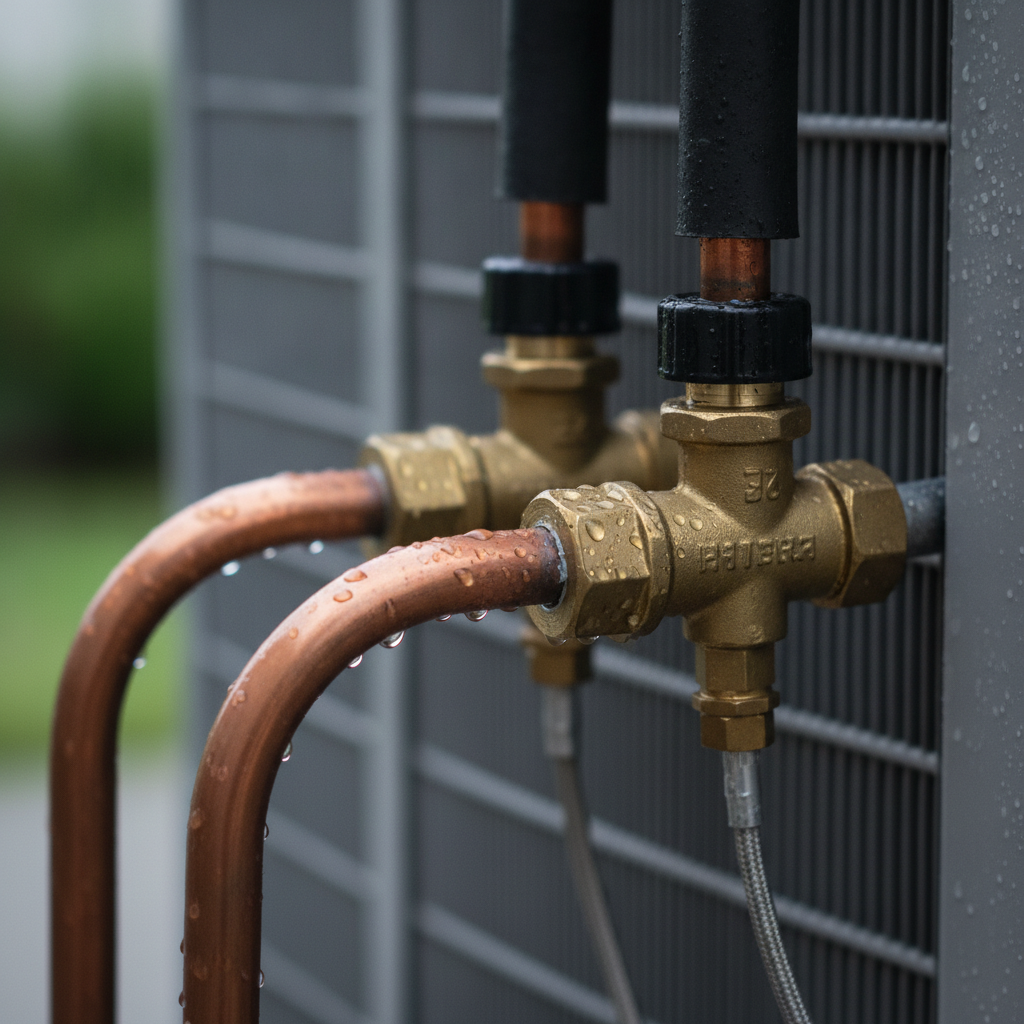
Step-by-step: size your AC for a Canadian home
Gather accurate home details, estimate sensible and latent gains, factor GTA humidity and sun exposure, then confirm ducts and electrical. A brief professional assessment removes guesswork and sets you up for quiet, even, dry comfort.
1) Gather the right inputs
- Home data: conditioned square footage, stories, ceiling heights, insulation, window areas and orientation.
- Use patterns: occupancy, cooking/laundry timing, internal heat sources (lighting, electronics).
- Duct reality: return size/paths, filter type, known hot/cold rooms.
2) Estimate heat gains
- Sensible: solar through glass, conduction through walls/roof, internal loads.
- Latent: infiltration plus indoor moisture (showers, cooking). GTA summers add real latent load.
3) Apply GTA-specific adjustments
- Orientation & shading: large west/south glass boosts afternoon peaks.
- Envelope: older stock often needs an infiltration allowance.
- Ventilation/IAQ: HRVs/fresh air must be included so capacity isn’t miscounted.
4) Validate constraints
- Duct capacity: confirm design cfm and external static pressure support the coil.
- Electrical: correct breaker/wire for condenser and air handler.
- Future plans: planned additions or glazing upgrades can shift load.
Field note: last August in a Mississauga neighborhood, we replaced a 3‑ton that short‑cycled every 4 minutes in a 1,800 sq ft detached. Indoor humidity hovered high and bedrooms felt muggy. We installed a 2.5‑ton with a matched coil and adjusted airflow—next day the homeowner reported dry, even 72°F through bedtime.
Sizing reference table for GTA and Mississauga homes
Use this as a conversation starter. Final choices depend on envelope, glazing, ducts, and target humidity. We show common home sizes, typical tonnage, real units we install, and a red‑flag that may shift sizing or airflow.
| Conditioned area (typical) | Common tonnage | Example Jimmy HVAC unit | Red flag to check |
|---|---|---|---|
| 900–1,200 sq ft | 1.5 ton | Lennox Merit 1.5‑Ton AC | Basement suite to cool? Consider airflow tweaks. |
| 1,200–1,600 sq ft | 2.0 ton | Lennox Merit 2‑Ton AC | Large west/south glass may suggest 2.5 ton. |
| 1,600–2,000 sq ft | 2.5 ton | Lennox Merit 2.5‑Ton AC | Restrictive returns? Fix or cycles may be noisy/short. |
| 2,000–2,400 sq ft | 3.0 ton | Lennox Merit 3‑Ton AC | Open‑to‑above great room? Confirm airflow balance. |
| 2,400–3,000 sq ft | 4.0 ton | Lennox Merit 4‑Ton AC | Multiple stories need careful supply/return strategy. |
| 3,000–3,600 sq ft | 5.0 ton | Lennox Merit 5‑Ton AC | Consider zoning or staged capacity for comfort. |
Rule of thumb we stand behind: for a well‑insulated 1,400–1,600 sq ft Mississauga semi with average glazing, we start at 2 tons and move to 2.5 only with west‑facing glass or high infiltration. Bigger isn’t “safer”—it’s noisier, clammy, and harder on equipment.
Why generic online calculators get it wrong in Ontario
Ontario homes vary in air sealing, glazing, and shading, and GTA summers add real latent load. Generic calculators ignore ducts, sun orientation, and humidity targets, so they routinely oversize or undersize. A professional assessment reflects how your specific house gains heat and moisture.
Walkthrough reality beats web forms. We see pull‑down attic hatches that leak, undersized returns, and sunrooms behaving like radiators at 5 p.m. That’s why a house that “should be fine” on paper still feels sticky. Duct design matters as much as nameplate tonnage—see this primer on ductwork and summer cooling.
Modeling glass area/SHGC and shading matters too. A bright great room can add thousands of BTUs to the peak. For homeowner planning points, this Toronto AC buying guide and maintenance tips outline practical steps to keep performance consistent after install.
Real units at real sizes: what Jimmy HVAC stocks and installs
We install matched central air systems from 1.5 to 5 tons, confirming load and duct capacity before recommending a model/coil pairing. The aim is steady, quiet cycles that dry the air and hold setpoint on humid GTA nights.
Our most common replacements are central air units in the Lennox Merit Series across 1.5–5 tons (linked in the table). For homes planning partial electrification or quieter shoulder‑season comfort, we also install ducted heat pumps sized to the same cooling load math and tuned airflow for dehumidification.
Light‑commercial or larger detached homes may need 4–5 ton condensers or rooftop solutions once structure and electrical are verified. Where multi‑level balance is a concern, we design zoning or supply/return adjustments so bedrooms don’t lag behind living spaces.
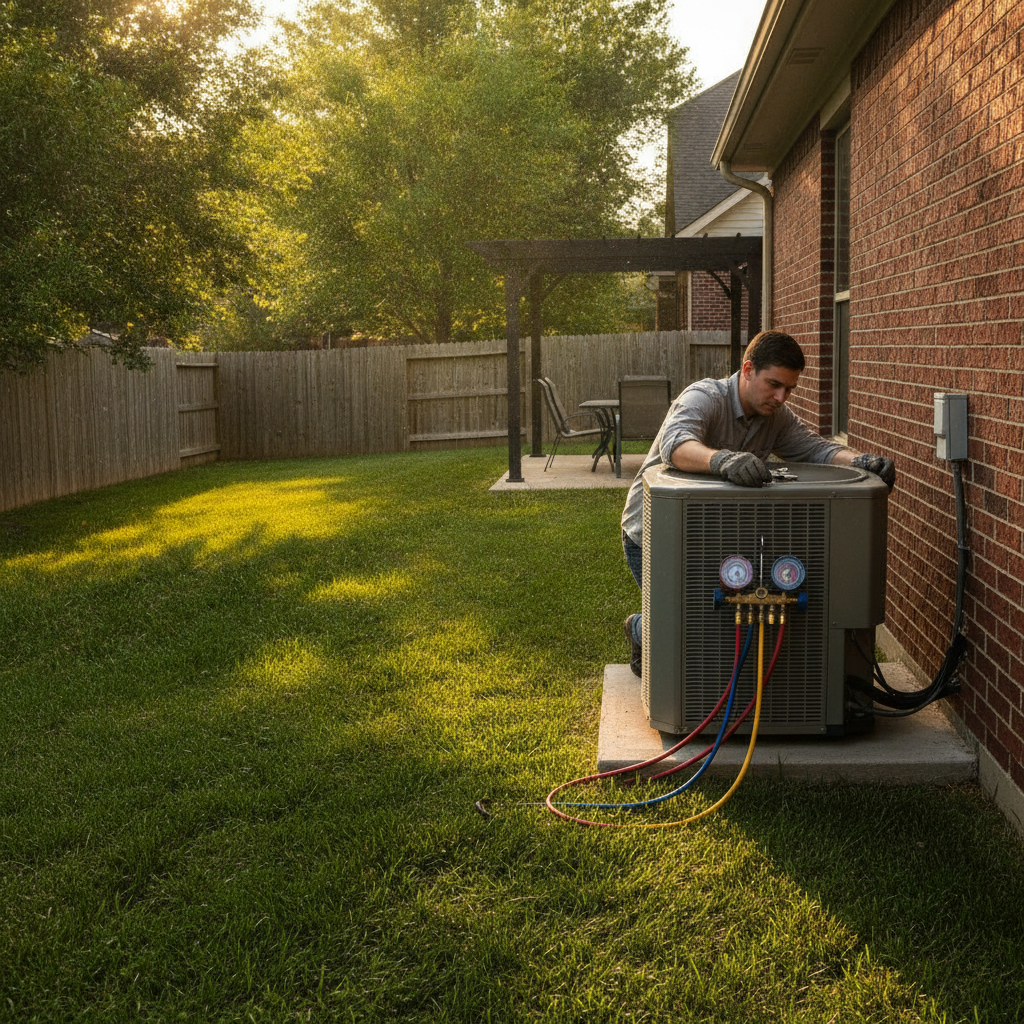
When to call for a Manual J load calculation
Get a Manual J when humidity lingers, glass areas are large, rooms swing several degrees, or you’re changing equipment type. A professional calculation validates tonnage, airflow, and coil pairing so your new system cools and dehumidifies as designed.
- Major changes: new windows, added insulation, finished basements, or additions.
- Comfort red flags: sticky air, upstairs always warmer, or long recovery after hot afternoons.
- System shift: switching to a heat pump, adding ventilation/HRV, or reworking ducts.
- Multi‑story balance: uneven temperatures point to airflow/zoning needs.
Local considerations for Mississauga and the GTA
- West‑ and south‑facing rooms often need register and return adjustments; we balance during commissioning.
- Overnight humidity can stay high; sizing for longer cycles keeps bedrooms comfortably dry.
- Older detached homes may have tight returns; we assess return paths so the system can deliver rated cfm.
FAQ: air conditioner sizing and selection
Sizing is about matching capacity to your unique home—not chasing the biggest number. These answers explain BTU vs ton, humidity effects, and what to expect from a professional assessment in the GTA’s humid summers.
How many BTUs per square foot should I use?
Skip one-size rules. Square footage is only one input. Insulation, air sealing, windows, sun exposure, occupancy, and humidity targets all matter. Use a Manual J–style estimate for sensible and latent gains, then confirm duct capacity and airflow before picking tonnage.
Is a 2‑ton unit enough for a 1,600 sq ft GTA home?
Often, yes—if insulation is solid and glazing is moderate. Large west‑facing glass, higher infiltration, or tighter humidity targets can point to 2.5 tons. A short professional assessment prevents guesswork and catches duct limits early.
What’s the difference between BTU and ton?
BTU/h is the cooling rate; one ton equals 12,000 BTU/h. Real comfort depends on how that capacity is used—airflow, coil selection, and indoor/outdoor conditions determine how much goes to temperature vs humidity removal.
Do heat pumps size differently than ACs?
Cooling size follows the same load math. We confirm sensible and latent gains, duct capacity, and airflow. The heating side adds winter design choices, but in summer a properly sized ducted heat pump cools and dehumidifies like a right‑sized central AC.
Conclusion and key takeaways
A right‑sized AC feels calm, even, and dry—without constant starts and stops. Start with a realistic estimate, confirm with a professional assessment, and choose a matched system that your ducts and electrical can support.
- Start smart: use this air conditioner sizing guide to frame questions and priorities.
- Balance matters: temperature and humidity must both be addressed in the GTA.
- Verify ducts: capacity and static pressure can make or break comfort.
- Pick a match: select a model/coil pairing that supports long, quiet cycles.
Ready to get specific? We install across Brampton, Mississauga, and the GTA with licensed technicians and 24/7 support. For context on airflow and planning, see duct optimization basics, a practical AC buying guide, and maintenance steps that keep performance steady.
0 Comments