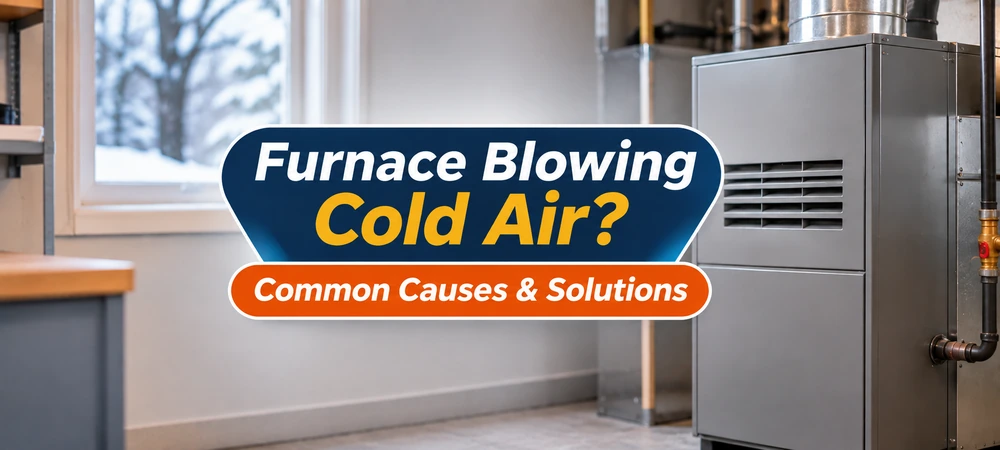
When temperatures drop across Ontario, a furnace should provide a steady supply of warm air to keep your home comfortable. If you notice cold or room-temperature air coming from your vents instead, it can be confusing, especially when the furnace appears to be running normally. A furnace blowing cold air can have several causes, ranging from a simple thermostat setting to an airflow restriction or an ignition problem that needs professional attention.
Before assuming your furnace has stopped working, it helps to understand how the system operates. Some brief periods of cooler airflow are normal, but air that stays cold while your home loses heat is a sign worth investigating.
Is It Normal for a Furnace to Blow Cold Air?
Not every brief burst of cool air means something is wrong. A forced-air furnace has a blower fan that circulates air through the ductwork, and the fan does not always operate at exactly the same time as the burners.
For example, the blower may continue running briefly after the burners shut off to distribute the remaining heat from the heat exchanger. If the thermostat fan is set to ON rather than AUTO, the blower may also circulate air between heating cycles. That air can feel cool because the furnace is not actively producing heat at that moment.
However, if the vents continue delivering cold air, the indoor temperature keeps falling or the furnace repeatedly starts without heating the home, there may be a problem that needs attention.
Why Is Your Furnace Blowing Cold Air? 8 Common Causes
1. The Thermostat Is Set Incorrectly
A thermostat setting is one of the first things to check when a furnace blows cool air. If the system is set to COOL instead of HEAT, or the fan is set to run continuously, the blower may circulate air without activating the heating cycle.
A programmed schedule or an accidental adjustment can also change the temperature setting without you noticing.
What you can check:
- Confirm that the thermostat is set to HEAT.
- Check that the target temperature is higher than the current room temperature.
- Set the fan to AUTO rather than ON if you want it to run only as part of the normal heating cycle.
- Review programmed schedules and replace thermostat batteries if the model uses them.
If the thermostat settings are correct but the furnace still does not produce heat, the issue may be with the thermostat wiring, controls or furnace itself.
2. The Furnace Air Filter Is Dirty or Clogged
A dirty furnace filter is a common cause of heating and airflow problems. As dust and debris accumulate, the filter restricts the amount of air moving through the furnace.
Restricted airflow can cause the heat exchanger to become too hot. The furnace’s high-limit safety control may then shut off the burners to protect the equipment, while the blower continues circulating air or completing its operating cycle. This can make it seem as though the furnace is blowing cold air.
What you can check:
- Locate the furnace filter according to the equipment instructions.
- Inspect it for visible dust buildup or blockage.
- Replace a disposable filter or clean a reusable filter as directed by its manufacturer.
- Use the correct filter size and type recommended for your furnace.
Filter replacement frequency depends on the filter type, household conditions, pets and furnace usage. Check it regularly during the heating season rather than relying on one schedule for every home.
3. The Furnace Ignition System Is Not Working Properly
Most modern gas furnaces use an electronic ignition system to light the burners when there is a demand for heat. If the ignition system fails, the blower may operate without the burners producing heat.
Depending on the furnace model, the problem could involve a hot-surface igniter, intermittent pilot system, ignition control or another component in the startup sequence.
You may notice that the furnace starts, makes its usual operating sounds and then shuts down without delivering warm air. Some models also display a diagnostic light or fault code when ignition fails.
What to do: Check the manufacturer’s instructions for the meaning of any visible diagnostic code. Ignition components involve electrical and gas-fired equipment, so testing and repair should be handled by a qualified HVAC technician.
4. The Flame Sensor Is Dirty or Faulty
A flame sensor is a safety component in many gas furnaces. It confirms that a flame is present after the burners ignite. If the control system cannot detect the flame correctly, it may shut off the gas supply to prevent unsafe operation.
When this happens, the furnace may attempt to start, briefly ignite and then shut down the burners. The blower may continue running, leaving cool air coming through the vents.
A dirty or damaged flame sensor is one possible cause, but the same symptom can be associated with other ignition or gas-supply issues. A technician should test the system and identify the actual fault rather than replacing parts based only on the symptom.
5. The Furnace Is Overheating and Shutting Down
Gas furnaces have safety controls that monitor operating temperatures. If the heat exchanger becomes too hot, a high-limit switch can shut off the burners to protect the furnace.
Restricted airflow is a common reason for overheating. A clogged filter, blocked return-air grille, closed registers or an airflow problem inside the system can all contribute.
What you can check:
- Inspect the air filter and replace it if it is dirty.
- Make sure supply registers are not covered by furniture, rugs or curtains.
- Keep return-air grilles clear so the furnace can draw air properly.
- Notice whether the furnace repeatedly starts and stops before reaching the thermostat setting.
If the furnace continues overheating or shutting down, arrange professional service. Do not bypass a limit switch or other safety control.
6. The Gas Supply Is Interrupted
A gas furnace needs a consistent fuel supply to produce heat. If the gas supply is interrupted or a gas-control component is not operating correctly, the burners may fail to light or remain on.
Possible causes include a closed gas shutoff valve, a supply interruption or a fault involving the furnace’s gas valve or controls.
If other gas appliances are also not working, there may be a broader supply issue. Do not attempt to repair a gas valve or alter gas connections yourself.
Important: If you smell natural gas, leave the building immediately. Do not operate electrical switches, use a phone inside or attempt to relight the furnace. From a safe location, contact your gas utility’s emergency line or 911.
7. The Furnace Vent or Intake Pipe Is Blocked
Many high-efficiency gas furnaces use exterior pipes to bring in combustion air and discharge exhaust gases. These pipes are often installed through an outside wall.
During an Ontario winter, snowdrifts, ice or other debris can obstruct the outdoor openings. If the furnace cannot receive the required combustion air or safely discharge exhaust, a safety control may prevent it from operating.
What you can check:
- Look at the exterior intake and exhaust openings from a safe position.
- Check for visible snow, ice, leaves or other obstructions.
- Keep the area around the openings clear in accordance with the manufacturer’s instructions.
- Do not insert tools into the pipes or dismantle vent connections.
If the pipes appear damaged, heavily iced or difficult to access safely, contact an HVAC technician. Never operate a furnace with an obstructed or damaged exhaust vent.
8. A Condensate Drain or Pressure Switch Problem
High-efficiency condensing furnaces produce water as part of their normal operation. This condensate is collected and drained away through a dedicated drain system.
If the drain becomes blocked, the condensate pump fails or water backs up, a safety control may prevent the furnace from continuing to operate. A pressure switch or its associated tubing can also prevent the furnace from completing its startup sequence if the required operating conditions are not detected.
These problems can cause repeated startup attempts, burner shutdowns or a complete loss of heat. Because the components are part of the furnace’s combustion and safety system, diagnosis should be left to a qualified technician.
What Should You Check First If Your Furnace Is Blowing Cold Air?
Before arranging a service visit, there are a few basic checks you can safely perform without opening the furnace cabinet or working on gas or electrical components.
- Check the thermostat: Confirm that it is set to HEAT and the target temperature is above the current room temperature.
- Review the fan setting: Set the fan to AUTO if you do not want continuous air circulation between heating cycles.
- Inspect the air filter: Replace a dirty disposable filter or clean a reusable one according to its instructions.
- Check the vents: Make sure supply registers and return-air grilles are open and unobstructed.
- Look at the outdoor vent openings: If your furnace has exterior intake and exhaust pipes, check for visible snow or debris blocking them.
- Observe the furnace: Note whether it starts, attempts to ignite, shuts down or displays a diagnostic code. Do not remove access panels to inspect internal components.
If these checks do not resolve the problem, a technician can inspect the furnace and determine why it is not producing heat.
When Should You Call an HVAC Technician?
If the furnace continues blowing cold air after the basic checks, professional diagnosis is the right next step. A heating system can have several components that produce similar symptoms, so guessing at the cause can lead to unnecessary repairs or leave the actual problem unresolved.
Arrange service if you notice any of the following:
- The furnace blower runs, but the air remains cold.
- The burners repeatedly start and shut down.
- The furnace cannot maintain the thermostat setting.
- The system displays a persistent error or diagnostic code.
- You hear unusual noises during startup or operation.
- The furnace repeatedly shuts down after running for a short time.
- You notice water leaking around the furnace or signs of a blocked condensate drain.
If a carbon monoxide alarm sounds, leave the building and call 911 from outside. Do not re-enter until emergency responders say it is safe. If you smell gas, evacuate and contact the gas utility or emergency services from a safe location.
How an HVAC Technician Diagnoses a Furnace Blowing Cold Air
A professional diagnosis looks beyond the air coming from the vents. The technician checks the furnace’s operating sequence and identifies where the heating process is being interrupted.
Depending on the symptoms and furnace model, an inspection may include:
- Checking thermostat operation and the heating demand signal.
- Inspecting the air filter, blower operation and airflow conditions.
- Reading furnace diagnostic codes and reviewing fault history where available.
- Testing the ignition sequence and flame-sensing operation.
- Inspecting safety controls, including limit and pressure switches.
- Checking gas supply and burner operation using appropriate test procedures.
- Inspecting combustion-air intake, exhaust venting and condensate drainage.
- Verifying safe furnace operation after any repair.
The exact tests depend on the furnace design and the fault being investigated. A proper diagnosis helps identify the underlying cause instead of treating only the symptom.
How to Help Prevent Furnace Heating Problems in Winter
Ontario furnaces often operate for extended periods during the heating season. Regular maintenance and good airflow can help reduce avoidable operating problems and support reliable performance.
Replace or clean the furnace filter regularly
Check the filter according to the manufacturer’s recommendations and your home’s conditions. Homes with pets, renovations or higher dust levels may need more frequent filter attention.
Keep supply and return vents clear
Furniture, curtains and rugs should not block airflow. The furnace needs a clear path to circulate heated air through the home and draw return air back to the equipment.
Keep exterior vent openings clear
After heavy snowfall, check that accessible furnace intake and exhaust openings remain free of snow and debris. Follow the clearance requirements in your furnace manual.
Schedule professional furnace maintenance
A qualified technician can inspect the burners, ignition system, electrical connections, safety controls, venting, condensate drainage and overall operation. Follow the maintenance interval recommended by the furnace manufacturer and your HVAC professional.
For more information about heating equipment and available options, explore Jimmy HVAC furnace solutions.
Frequently Asked Questions About a Furnace Blowing Cold Air
Why is my furnace blowing cold air when the heat is on?
The furnace may be circulating air without producing heat because of an incorrect thermostat setting, a dirty filter, restricted airflow, an ignition issue or a safety shutdown. Check the thermostat and filter first. If the problem continues, arrange a professional inspection.
Why does my furnace blow warm air and then turn cold?
This can happen if the burners shut down while the blower continues running. A dirty filter, overheating, flame-sensing issue or another interruption in the heating sequence may be responsible. The furnace needs to be checked if this happens repeatedly.
Should my furnace fan be set to ON or AUTO in winter?
AUTO generally runs the blower as part of the furnace’s heating cycle and allows it to stop between cycles. ON runs the fan continuously, even when the burners are not producing heat. Continuous circulation can be useful in some homes, but the air may feel cooler between heating cycles.
Can a dirty furnace filter cause cold air to come from the vents?
Yes. A clogged filter can restrict airflow and cause the furnace to overheat. The safety limit control may shut off the burners while the blower continues operating, resulting in cool air from the vents.
Why does my furnace start but not ignite?
A furnace may start its operating sequence but fail to ignite because of an issue with the ignition system, flame sensor, gas supply, pressure switch or another control. The exact cause depends on the model and diagnostic information. A qualified technician should inspect the system.
Can snow cause my furnace to stop heating?
Yes. Snow or ice can obstruct the exterior intake or exhaust openings of some high-efficiency gas furnaces. This can prevent the furnace from operating safely. Keep accessible openings clear according to the manufacturer’s instructions, and arrange service if the furnace remains shut down.
Is it safe to keep running a furnace that is blowing cold air?
If the furnace is not heating properly, do not keep resetting it or bypassing safety controls. Check the thermostat and filter, and arrange professional service if the problem continues. If a carbon monoxide alarm sounds or you smell gas, leave the building and seek emergency assistance.
How much does it cost to repair a furnace blowing cold air?
The cost depends on the actual cause, the furnace model, the parts required and the work involved. A thermostat setting or filter issue may need little more than a basic correction, while ignition, control, gas or venting problems require professional diagnosis and may involve replacement components. An inspection is needed to determine the repair cost.
Restore Reliable Heating with Jimmy HVAC
A furnace blowing cold air can be caused by something as simple as a thermostat setting or a dirty filter, but it can also indicate an ignition, airflow or safety-control problem. Checking the basic settings and filter is a sensible first step. If the furnace still cannot provide warm air, professional diagnosis can help identify the fault and restore proper operation.
Jimmy HVAC helps homeowners across Toronto and the Greater Toronto Area with their residential heating needs. If your furnace is not heating properly, contact our team to discuss the problem and arrange the appropriate service.
Contact Jimmy HVAC for furnace service and heating assistance.
0 Comments