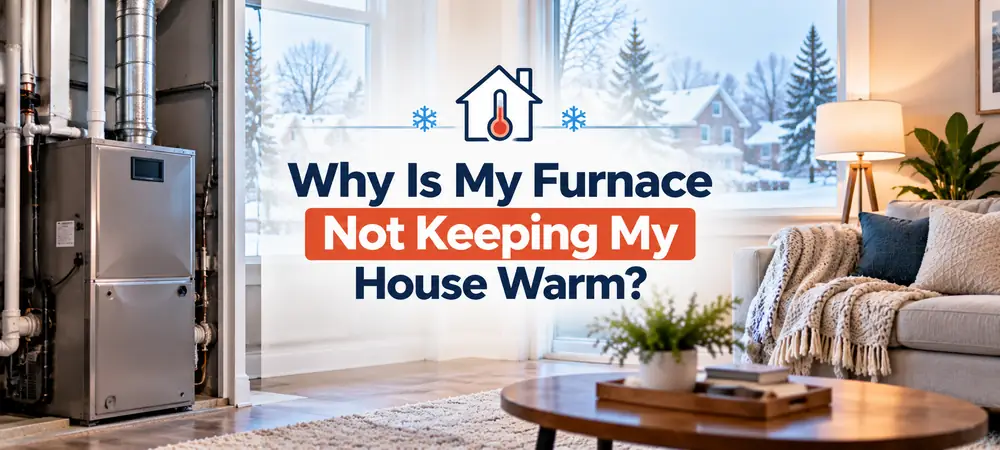
What to Check First When Your Furnace Isn’t Keeping Your House Warm
When temperatures drop across Ontario, a properly working furnace becomes essential for keeping your home comfortable. But what happens when your furnace is running and the house still feels cold? Maybe the thermostat is set to 21°C, but the temperature stays at 18°C. Or perhaps the furnace keeps turning on and off without making the rooms comfortable.
A furnace that runs but does not provide enough heat can have several causes. A dirty air filter, incorrect thermostat settings, restricted airflow, blocked outdoor vents, or an internal equipment problem may all affect heating performance.
For homeowners in Toronto and the Greater Toronto Area (GTA), these problems can become particularly frustrating during the coldest weeks of winter. Ignoring a heating problem can also lead to discomfort, higher energy consumption, and potentially more serious equipment issues.
In this guide, we explain why your furnace may not be keeping your house warm, what you can safely check yourself, which problems require professional attention, and how to prepare your heating system for the Canadian winter.
Quick answer: If your furnace is running but your house is not getting warm, start by checking the thermostat settings, furnace filter, supply vents, and return air grilles. If the problem continues, the cause may involve the blower, ignition system, burners, ductwork, or another internal component that needs professional diagnosis.
Why Is My Furnace Not Heating My House Properly?
A furnace needs several components to work together to heat your home. It must receive a heating request from the thermostat, operate its heating components safely, and circulate warm air through the ductwork.
If any part of this process is affected, your home may not reach the temperature you have selected.
Here are some common reasons a furnace may not be heating your house properly:
- Dirty furnace filter: Dust buildup restricts airflow and can cause the furnace to overheat or shut down.
- Incorrect thermostat settings: The thermostat may not be calling for heat correctly.
- Blocked supply or return vents: Restricted airflow can prevent warm air from circulating properly.
- Blocked outdoor intake or exhaust pipes: Snow, ice, or debris can interfere with furnace operation.
- Ignition or burner problems: The furnace may not be producing heat even though some components are operating.
- Blower motor problems: The system may produce heat but fail to distribute it properly.
- Ductwork issues: Leaks, restrictions, or poor airflow balancing can affect room temperatures.
- Incorrect furnace sizing: Equipment that does not match the home’s heating requirements may struggle to maintain comfort.
Understanding these possibilities can help you identify what to look for before arranging a service visit.
1. Check Your Thermostat Settings
Before assuming that something is wrong with your furnace, check the thermostat. Sometimes a simple setting or scheduling issue can prevent the heating system from operating as expected.
Start with these checks:
- Make sure the thermostat is set to HEAT, not COOL or OFF.
- Check that the selected temperature is higher than the current room temperature.
- If your thermostat uses batteries, check whether they need replacement.
- Review the programmed schedule to make sure it is not lowering the temperature unexpectedly.
- Check whether the thermostat displays an error message or warning.
Should the furnace fan be set to AUTO or ON?
Many thermostats have separate fan settings, commonly AUTO and ON.
When set to AUTO, the blower generally operates when the heating system needs to circulate air. When set to ON, the blower may continue running even when the furnace is not actively producing heat.
This can sometimes make the air coming from the vents feel cooler between heating cycles because the blower is circulating indoor air.
If you are unsure which setting is appropriate, check your thermostat and furnace manufacturer’s instructions.
2. Check and Replace a Dirty Furnace Filter
A dirty furnace filter is one of the most common things to investigate when a furnace is not heating properly.
Your furnace filter catches dust, pet hair, and other airborne particles before they enter the system. Over time, these particles accumulate and restrict airflow.
When airflow becomes restricted, your furnace may have difficulty moving enough air through the heat exchanger. This can cause overheating and activate safety controls that shut down the heating cycle.
How to check your furnace filter
- Turn off the furnace according to the manufacturer’s instructions.
- Locate the filter compartment, usually near the return air duct or blower section.
- Carefully remove the filter.
- Inspect it for dust buildup, dirt, or visible blockage.
- If it is disposable and dirty, replace it with the correct size and type recommended for your furnace.
- Install the replacement in the correct airflow direction.
How often you need to replace a filter depends on its type, household conditions, pets, dust levels, and furnace usage. Check it regularly during the heating season and follow the manufacturer’s recommendations.
Do not automatically choose a thicker or higher-rated filter. Some filters create greater airflow resistance and may not be suitable for every furnace.
Homeowner tip: If your furnace suddenly starts heating better after replacing a heavily clogged filter, restricted airflow may have contributed to the problem. If it continues to struggle, further inspection is needed.
3. Make Sure Your Heating Vents Are Not Blocked
Your furnace uses ductwork to distribute warm air throughout your home. If supply vents are covered or return air grilles are blocked, the system may not circulate air properly.
This is particularly common during winter when homeowners move furniture, place rugs over floor registers, or keep bedroom doors closed for long periods.
What should you check?
- Make sure the heating vents in bedrooms and living areas are open.
- Move furniture, curtains, and rugs away from supply registers.
- Check that return air grilles are not covered by furniture or household items.
- Look for visible dust or obstructions around the vent openings.
- Compare airflow from different rooms while the furnace is operating normally.
If one room receives very little warm air while other rooms heat normally, there may be a ductwork or airflow balancing problem.
Avoid closing large numbers of vents to force more air into other rooms. This can increase duct pressure and interfere with the system’s designed airflow.
4. Check Outdoor Furnace Intake and Exhaust Vents
This is an important winter check for homeowners with high-efficiency gas furnaces.
Many modern high-efficiency furnaces use PVC pipes that extend through an exterior wall to bring in combustion air and safely exhaust combustion gases outside.
During Canadian winters, these outdoor openings can become obstructed by:
- Heavy snowfall or snow drifting against the wall.
- Ice buildup around the pipe openings.
- Leaves, dirt, or other debris.
- Bird nests or other foreign objects.
If the intake or exhaust becomes blocked, the furnace may stop operating because its safety controls detect an unsafe operating condition.
How to check outdoor furnace vents
- Locate the furnace intake and exhaust openings on the exterior wall.
- From a safe position, visually inspect them for snow, ice, or visible obstructions.
- Check whether snow has accumulated around the openings.
- If an obstruction is safely accessible, clear loose snow away without pushing anything into the pipes or damaging them.
- Contact an HVAC technician if there is ice buildup, a suspected internal blockage, or uncertainty about the condition of the pipes.
Never disconnect the pipes, insert tools into them, or modify the venting arrangement yourself. Proper furnace venting is important for safe operation.
Important: Keep outdoor intake and exhaust openings clear throughout winter, especially after heavy snowfall.
5. Your Furnace May Have an Ignition or Burner Problem
If your furnace starts but does not produce warm air, the ignition system or burners may not be operating correctly.
Modern gas furnaces use electronic ignition systems to light the burners when there is a demand for heat. Older equipment may use a standing pilot light.
If the ignition process fails, the furnace may attempt to start and then shut down through its safety controls.
Signs of a possible ignition problem
- You hear the furnace attempting to start, but warm air never arrives.
- The furnace starts briefly and then shuts down.
- The furnace repeatedly attempts to ignite.
- You notice an error code or flashing diagnostic light.
- The system operates intermittently and does not maintain the desired temperature.
Ignition problems can involve the igniter, flame sensor, gas supply, pressure switch, control board, or other components.
These are not homeowner repair tasks. Do not attempt to clean internal combustion components, adjust gas valves, relight a pilot without the manufacturer’s approved procedure, or bypass furnace safety controls.
A qualified HVAC technician can identify the cause and determine which component requires attention.
6. The Furnace Blower May Not Be Circulating Enough Air
Your furnace’s blower motor is responsible for moving heated air through the ductwork and into different rooms.
If the blower is not operating correctly, the furnace may produce heat without distributing enough warm air throughout your home.
In some situations, you may notice that the furnace starts but airflow from the vents is weak or inconsistent.
Possible signs of a blower problem
- Very weak airflow from multiple supply vents.
- Unusual humming, rattling, or grinding sounds.
- The furnace starts but warm air circulation seems limited.
- The furnace shuts down because of an airflow-related safety issue.
- Some rooms receive noticeably less air than before.
Blower problems can involve the motor, capacitor, electrical connections, control board, or other parts of the air distribution system.
Because these components involve electrical and mechanical work, professional diagnosis is recommended rather than opening the furnace and attempting repairs yourself.
7. Your Furnace May Be Short Cycling
Short cycling happens when a furnace repeatedly starts and stops over a relatively short period instead of completing normal heating cycles.
For example, the furnace may start, run for a short time, shut down, and then start again after a brief interval.
This can make it difficult for your home to maintain a comfortable temperature, especially during colder weather.
Common reasons for furnace short cycling
- A dirty or clogged furnace filter restricting airflow.
- Blocked supply or return air pathways.
- Overheating that activates a safety limit.
- A thermostat problem or unsuitable thermostat location.
- Equipment sizing or installation problems.
- A malfunctioning safety control or other internal component.
Start by checking the filter, thermostat, and accessible vents. If the furnace continues to cycle frequently, arrange professional service.
Repeatedly restarting the furnace without understanding the cause is not a reliable solution. The safety controls may be shutting down the system to prevent damage or unsafe operation.
8. Check for Ductwork Problems and Uneven Heating
Sometimes the furnace itself is working correctly, but the ductwork is not distributing enough warm air to every room.
This can happen in larger homes, older properties, houses with multiple floors, and homes where renovations have changed the original heating layout.
Common ductwork problems include:
- Air leaks around duct joints and connections.
- Disconnected or damaged duct sections.
- Undersized ducts that cannot supply the required airflow.
- Long or restrictive duct runs.
- Incorrectly adjusted balancing dampers.
- Obstructions inside accessible duct sections.
If your living room feels warm but an upstairs bedroom remains cold, the problem may be related to airflow distribution rather than the furnace’s heat production.
An HVAC technician can measure airflow, inspect accessible ductwork, and assess whether the system is properly balanced.
Read our related guide: Why Is One Room Colder Than the Rest of the House?
9. Your Home May Be Losing Heat Too Quickly
Not every heating problem starts with the furnace. Sometimes your heating system is working normally, but your home is losing heat faster than it can be replaced.
This is particularly noticeable during cold Ontario winters when outdoor temperatures fall significantly.
Common sources of heat loss include:
- Poor attic or wall insulation.
- Drafty windows and exterior doors.
- Gaps around window frames and other openings.
- Insufficient insulation above garages or in basement areas.
- Air leakage around plumbing and electrical penetrations.
If your furnace runs for long periods but the house still struggles to reach the thermostat setting, excessive heat loss may be part of the problem.
Check for obvious drafts and visible gaps around doors and windows. Larger insulation or air leakage issues may require a building-envelope assessment.
Improving insulation and air sealing can help reduce heat loss and make it easier for your furnace to maintain comfortable indoor temperatures.
10. Your Furnace May Be Too Small for Your Home
If your furnace runs for extended periods during very cold weather but cannot maintain the desired indoor temperature, its heating capacity may not be sufficient for your home’s actual heating requirements.
This can happen when a furnace was incorrectly sized, when a home has been expanded, or when changes to the building envelope have affected the heating load.
However, a furnace that runs continuously is not automatically undersized. During extremely cold weather, longer heating cycles can be normal.
Before considering a replacement, a professional should evaluate:
- The home’s heating load and insulation levels.
- The furnace’s heating capacity and operating condition.
- The condition and design of the ductwork.
- Airflow throughout the house.
- Thermostat operation and system controls.
A proper heating-load calculation helps determine the correct equipment size. Choosing a larger furnace based only on square footage or the capacity of the existing unit can lead to other performance problems.
If replacement is recommended, explore the available furnace options from Jimmy HVAC.
What Should You Do If Your Furnace Stops Working During Winter?
A furnace breakdown during winter can quickly become a serious problem, particularly when outdoor temperatures are below freezing.
If your furnace stops heating, follow these basic steps:
- Check the thermostat: Confirm that it is set to HEAT and the temperature is above the current indoor temperature.
- Inspect the air filter: A heavily clogged filter can restrict airflow and contribute to a furnace shutdown.
- Check the vents: Make sure supply registers and return grilles are not blocked.
- Look at the electrical panel: If the furnace breaker has tripped, do not repeatedly reset it. If it trips again, arrange professional inspection.
- Inspect outdoor vents: Look for visible snow or debris blocking the intake or exhaust openings, where safely accessible.
- Check for warning signs: Look for error indicators or unusual operating behaviour without opening sealed equipment compartments.
- Arrange professional service: If the furnace still does not operate normally, contact a qualified HVAC technician.
Do not repeatedly press the furnace reset button or attempt to bypass safety controls. If the system has shut down because of a combustion or ignition problem, further attempts may create additional risks.
Important Furnace Safety Tips for Canadian Homeowners
Your furnace uses fuel, electricity, and combustion or other heating components. Proper operation and regular maintenance are important for household safety.
Never ignore a natural gas smell
If you smell natural gas or notice a rotten-egg odour, leave the building immediately. Do not operate electrical switches, use appliances, or attempt to investigate the furnace. Once outside, contact your gas utility or emergency services using the appropriate emergency number.
Pay attention to carbon monoxide alarms
Carbon monoxide is an odourless, colourless gas that can be produced by improperly operating fuel-burning appliances.
If your carbon monoxide alarm activates, leave the home immediately and call 911 from a safe location. Do not re-enter until emergency responders say it is safe.
Headaches, dizziness, nausea, and unusual weakness can also be warning signs of carbon monoxide exposure.
Keep furnace intake and exhaust openings clear
During winter, check accessible outdoor furnace vent openings for snow and debris. Blocked venting can affect safe furnace operation.
Never modify combustion or exhaust components yourself.
For additional information, see Health Canada’s carbon monoxide safety guidance.
How to Prepare Your Furnace for a Canadian Winter
The best time to prepare your furnace is before the coldest weather arrives. A little attention in the fall can help identify potential problems before you depend on your heating system every day.
Here are some important winter preparation steps for homeowners.
1. Schedule professional furnace maintenance
A qualified HVAC technician can inspect the heating system, check its operation, assess combustion safety, inspect the heat exchanger and venting, and identify components that may need attention.
Professional maintenance is particularly important before the heating season begins.
2. Replace dirty air filters
Check your filter and replace it when needed. A clean filter supports proper airflow and helps the furnace operate as intended.
3. Keep supply and return vents clear
Make sure furniture, rugs, and other household items are not blocking air circulation.
4. Inspect outdoor intake and exhaust pipes
Check accessible openings for debris and make sure snow does not accumulate around them during winter.
5. Check your thermostat
Test your heating settings before extremely cold weather arrives. If you use a programmable thermostat, review the schedule to make sure it matches your household routine.
6. Address drafts and insulation problems
Check doors and windows for obvious air leaks. Consider investigating insulation problems if certain rooms consistently feel colder than others.
Natural Resources Canada provides further advice in its guide to maintaining your home’s heating and cooling system.
The Heating, Refrigeration and Air Conditioning Institute of Canada (HRAI) also recommends preparing heating equipment before winter through maintenance, filter checks, and outdoor vent inspections.
When Should You Repair or Replace Your Furnace?
If your furnace is not keeping your home warm, the right decision depends on the equipment’s age, condition, repair requirements, and overall performance.
Not every heating problem requires a new furnace. Sometimes a relatively straightforward repair or airflow correction can restore normal operation.
Furnace repair may be suitable when:
- The equipment is generally in good condition.
- The issue is caused by a specific repairable component.
- The furnace can still meet your home’s heating requirements.
- Repair costs are reasonable compared with replacement.
- The system can continue operating safely and reliably.
Furnace replacement may be worth considering when:
- Your furnace is approaching the end of its expected service life.
- It requires frequent or increasingly expensive repairs.
- Major components are damaged or the equipment cannot operate safely.
- The existing system cannot adequately heat your home.
- A newer, properly sized system offers a better long-term solution.
When comparing replacement options, consider the furnace’s AFUE rating, heating capacity, installation requirements, warranty, and expected operating costs.
Explore high-efficiency furnace options available through Jimmy HVAC.
How Jimmy HVAC Can Help Keep Your Home Warm This Winter
When winter temperatures arrive in Toronto and the GTA, a dependable heating system is essential for your family’s comfort.
If your furnace is not producing enough heat, keeps shutting down, or struggles to maintain the thermostat temperature, it is important to identify the actual cause rather than repeatedly adjusting the thermostat.
Jimmy HVAC helps homeowners explore heating solutions, including furnace options and modern heat pump systems. Whether you are considering a furnace replacement or looking for a suitable heating and cooling system for your home, choosing equipment based on your property’s requirements is important.
Explore our furnace collection, learn more about ducted heat pump systems, or visit our HVAC services page.
For homeowners planning a heating system upgrade in Toronto or the Greater Toronto Area, our team can help discuss available options and installation requirements.
Is your furnace struggling to keep your home warm? Contact Jimmy HVAC to discuss your heating requirements and request a quote.
Frequently Asked Questions About Furnace Heating Problems
1. Why is my furnace running but not heating my house?
Your furnace may be running without producing enough heat because of a dirty air filter, incorrect thermostat settings, blocked airflow, an ignition problem, or an internal equipment fault. Start with basic checks, such as the thermostat and filter. If the problem continues, arrange professional diagnosis.
2. Why is my furnace blowing cold air instead of hot air?
Possible causes include the fan running continuously, a normal startup or shutdown cycle, restricted airflow, failed ignition, or a heating-system malfunction. If the furnace continues blowing cold air and does not restore normal heating, have it inspected.
3. Why does my furnace keep running but my house stays cold?
Your furnace may be running for long periods because of very cold outdoor temperatures, heat loss through windows or walls, restricted airflow, ductwork problems, or insufficient heating capacity. A professional assessment can help determine whether the problem is related to the equipment or your home’s heating requirements.
4. Can a dirty furnace filter stop my furnace from heating?
Yes. A clogged filter can restrict airflow, causing the furnace to overheat and activate safety controls. Depending on the system, this may result in repeated shutdowns or reduced heating performance. Inspect and replace the filter according to the manufacturer’s recommendations.
5. Why does my furnace turn on and then shut off?
This may be caused by short cycling, restricted airflow, overheating, thermostat problems, ignition issues, or a faulty safety control. If the furnace repeatedly starts and stops, it should be professionally inspected rather than repeatedly reset.
6. How often should I change my furnace filter in winter?
It depends on the filter type, household conditions, pets, dust levels, and furnace usage. Check the filter regularly during winter and follow the manufacturer’s replacement recommendations. Some filters need more frequent attention than others.
7. Can snow block my furnace and stop it from working?
Yes. Snow or ice can obstruct the outdoor intake or exhaust openings of some high-efficiency gas furnaces. This can trigger a safety shutdown. Check accessible openings after snowfall and arrange professional help if ice or an internal blockage is suspected.
8. Why is my furnace not heating all the rooms equally?
Uneven heating can be caused by restricted vents, poorly balanced ductwork, air leaks, insulation problems, or differences in room heating requirements. A technician can assess airflow and determine whether the system needs balancing or other corrections.
9. Is it normal for a furnace to run continuously in very cold weather?
Longer heating cycles can be normal when outdoor temperatures are extremely low because the home loses heat more quickly. However, if the furnace runs continuously and cannot maintain the desired indoor temperature, the system and home’s heating requirements should be assessed.
10. How do I know if my furnace needs replacement?
Frequent repairs, declining performance, significant component problems, safety concerns, and an inability to meet your home’s heating needs may indicate that replacement is worth considering. A professional assessment can help compare the cost of repair with the benefits of a new system.
11. Should I turn off my furnace if it is not heating properly?
It depends on the symptoms. If you notice a gas smell, a carbon monoxide alarm, smoke, or another immediate safety concern, leave the home and contact emergency services or the appropriate utility from a safe location. For ordinary heating problems, follow the manufacturer’s instructions and arrange professional service if basic checks do not resolve the issue.
12. When is the best time to service a furnace in Canada?
Fall is a practical time to arrange furnace maintenance before regular winter heating begins. This gives a qualified technician an opportunity to inspect the equipment and identify potential issues before the coldest weather arrives.
Final Thoughts: Don’t Ignore Furnace Heating Problems Before Winter
A furnace that runs but does not keep your house warm can be frustrating, especially when Canadian winter temperatures begin to drop. The problem may be as simple as a dirty filter or blocked vent, or it may involve a more complex issue with the ignition system, blower, ductwork, or heating capacity.
Start with the basic checks you can safely perform, keep outdoor furnace vents clear, and arrange professional service when the system continues to operate abnormally.
It is also worth preparing your heating system before winter rather than waiting until the coldest day of the year to discover a problem.
A properly selected, maintained, and operating heating system helps your home stay comfortable throughout the Canadian heating season.
Getting your home ready for winter? Explore furnace options from Jimmy HVAC or contact our team to discuss your heating and cooling requirements in Toronto and the GTA.
0 Comments