Heat Pump Rebates 2027 in Canada: What Ontario Homeowners Need to Know
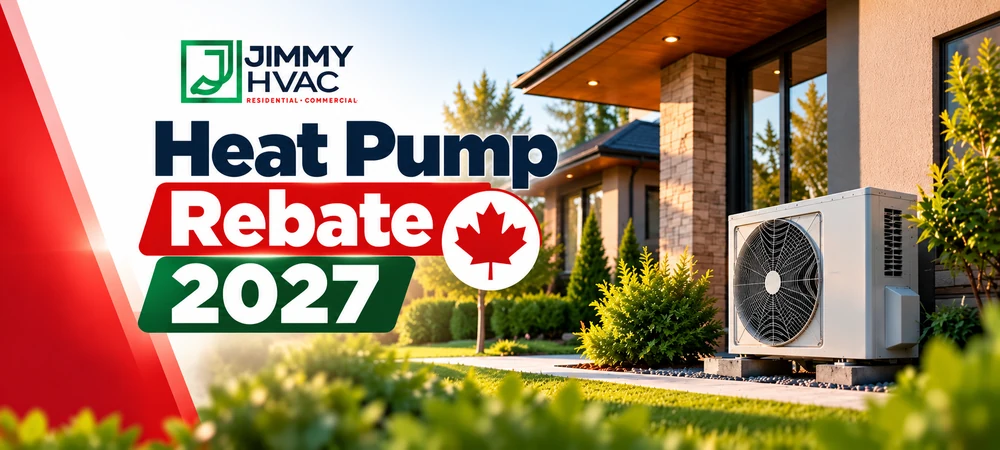
Canadian homeowners may soon have a new opportunity to reduce the upfront cost of installing an energy-efficient heat pump. The federal government has announced a new National Heat Pump Rebate program designed to help eligible households replace their existing heating systems with electric heat pumps.
Announced in October 2026, the program is part of a $2-billion federal investment in home retrofits. It is expected to support up to 820,000 households over eight years, with rebates of up to $10,000 for eligible households earning below their province’s median after-tax income. Other eligible households may receive a $2,000 rebate.
For homeowners in Ontario, including Toronto and the Greater Toronto Area (GTA), this announcement is worth understanding before planning a heating system replacement.
In this guide, we explain what has been announced so far, how the proposed rebate amounts work, who may qualify, how the application process is expected to work, and what homeowners can do now to prepare for a heat pump installation.
Important: The program is upcoming. Final eligibility rules, application requirements, and other details should be confirmed through the official government program before purchasing equipment or making installation decisions.
What Is the New National Heat Pump Rebate Program?
The National Heat Pump Rebate is a new federal initiative intended to make electric heat pumps more affordable for Canadian households.
Many homeowners replace their furnaces or other heating systems only after they stop working. At that point, restoring heat quickly becomes the priority, and there may be little time to research alternative heating options or available financial assistance.
The federal government says the new program is intended to make it easier for homeowners to choose a heat pump when their existing heating system breaks down. It is also intended to help homeowners plan a replacement before their current system reaches the end of its useful life.
The program has been announced as part of a broader $2-billion investment in home energy upgrades. Its key features include:
- Up to $10,000: The maximum announced rebate for eligible households below their province’s median after-tax income.
- $2,000: The announced rebate for other eligible households.
- Up to 820,000 households: The expected number of households the program could support over eight years.
- Online applications: Homeowners are expected to apply through a government portal.
- No energy audit requirement: The government has announced that a pre-installation or post-installation energy audit will not be required for this program.
- Potential combination with provincial incentives: The federal government says the rebate can be combined with existing provincial programs, subject to the applicable rules.
These are announced program details, not a guarantee of approval for every applicant. The final program guidance will determine how each requirement is applied.
How Much Can You Get From the 2027 Heat Pump Rebate?
The announced rebate amount depends on household income relative to the median after-tax income in the province where the household is located.
| Household Income Category | Announced Federal Rebate |
|---|---|
| Below the provincial median after-tax income | Up to $10,000 |
| Above the provincial median after-tax income | $2,000 |
The phrase “up to $10,000” is important. It is the maximum announced rebate for eligible households in the lower-income category, not a guaranteed payment to every homeowner.
Your actual eligibility and approved amount will depend on the final program requirements, the eligible heat pump system, and the costs and other conditions covered by the program.
Example: How a Rebate Could Reduce the Upfront Cost
Suppose an eligible heat pump installation costs $12,000 before incentives.
| Example | Amount |
|---|---|
| Total installation cost | $12,000 |
| Illustrative federal rebate | $2,000 |
| Remaining cost before other incentives | $10,000 |
If a household qualifies for a larger rebate, the remaining cost could be lower. For example, a $10,000 rebate against the same $12,000 installation would leave $2,000 before any other eligible incentives.
These are simplified examples, not installation quotes or guaranteed rebate calculations. Actual equipment costs, installation requirements, rebate limits, and eligibility may differ.
When Will the 2027 Heat Pump Rebate Start?
The federal government announced the program in October 2026 and said it would be introduced in early 2027. The government’s announcement also indicated that an online application portal would be available by January 2027.
The expected launch is important for homeowners who are considering replacing an aging furnace or another heating system.
However, an announced launch date is not the same as an open application period. Before relying on the rebate, homeowners should check the official program website for confirmation that applications are open and that their proposed equipment and installation meet the requirements.
If your heating system is still working, this may be a good time to research heat pump options and understand your home’s heating needs.
If your furnace has already failed, speak with a qualified HVAC contractor promptly about safe, practical replacement options. Do not assume that an installation completed before the program opens will automatically qualify for a rebate. Confirm the rules about application timing and installation dates first.
Who May Qualify for the National Heat Pump Rebate?
The federal announcement describes a program intended to help eligible Canadian households switch to electric heat pumps. It also says that the new program will cover a broader range of existing heating systems than the earlier oil-focused federal affordability program.
The final eligibility rules will determine whether a particular household, property, and heat pump installation qualifies.
1. Homeowners Replacing an Existing Heating System
The program is intended to help households replace existing heating equipment with eligible electric heat pumps. The announcement specifically highlights situations where a heating system has broken down or is approaching the end of its useful life.
The government has described eligible replacements involving existing heating systems that use fuels or electricity, including:
- Natural gas
- Propane
- Oil
- Diesel
- Electric resistance heating, such as electric baseboards
The exact systems, property types, and installation configurations covered must be confirmed through the final program guidance.
2. Households in Different Income Categories
The announced rebate is income-based. Eligible households below their province’s median after-tax income may receive up to $10,000, while other eligible households may receive $2,000.
The federal government has indicated that the income assessment will use an approach similar to the one used for the former Oil to Heat Pump Affordability program.
Homeowners should not assume that a particular salary automatically determines eligibility. The final rules may specify how household income, household size, tax information, or other factors are assessed.
3. Homeowners Choosing an Eligible Heat Pump
Not every heat pump will necessarily qualify. The federal announcement says the system must appear on the program’s Eligible Products List.
Before selecting equipment, ask your HVAC contractor for the exact make and model numbers of the proposed system and check the official eligible product list when the new program’s requirements are published.
A system’s advertised efficiency or brand name alone should not be treated as proof of rebate eligibility.
4. One Rebate Per Person
The federal announcement says the program permits only one rebate per person. It gives the example of a landlord who receives a rebate for a heat pump installed in a rental property not being able to receive another rebate for a heat pump installed in their own residence.
Property owners with multiple homes or rental properties should review the final rules carefully before making plans based on receiving more than one rebate.
Can Ontario Homeowners Receive the Heat Pump Rebate?
Ontario homeowners are among the Canadians who should follow the new national program announcement. The federal government has stated that the National Heat Pump Rebate is intended to operate across Canada.
For homeowners in Toronto, Mississauga, Brampton, Vaughan, Markham, Richmond Hill, Oakville, Burlington, Hamilton, and other GTA communities, the potential rebate could make a heat pump replacement more affordable.
However, the federal announcement does not mean that every homeowner in Ontario automatically qualifies. Household income, the existing heating system, the selected heat pump, and the final program conditions will all matter.
Homeowners should also check whether any Ontario or utility incentive is available for their specific property and proposed installation.
Can You Combine the Federal Rebate With Ontario Incentives?
The federal government has said the new rebate can be combined with existing provincial programs, potentially reducing upfront installation costs further.
That does not mean every provincial, utility, or local incentive can automatically be combined with the federal rebate. Individual programs may have separate eligibility requirements, funding limits, application deadlines, or restrictions on combining incentives.
Before committing to a purchase, confirm:
- Whether the federal program accepts your proposed system.
- Whether a provincial or utility incentive is available for your property.
- Whether both programs can be used for the same installation.
- Whether applications must be submitted in a particular order.
- Whether the equipment must be purchased or installed after a specific date.
Check the official federal program and the relevant Ontario or utility program for current rules rather than relying on an estimated combined rebate amount.
How to Apply for the 2027 Heat Pump Rebate
The government has announced a simplified online application process intended to help homeowners make heating replacements without lengthy delays.
Based on the announced process, homeowners should expect the following general steps. The final portal instructions will take precedence.
Step 1: Review Your Current Heating System
Identify the system currently heating your home. This could be a natural gas furnace, an oil or propane heating system, electric baseboard heating, or another type of system.
If the equipment is approaching the end of its useful life, begin researching replacement options before it fails. This gives you more time to compare systems and understand the potential costs.
Step 2: Choose a Suitable Heat Pump System
A qualified HVAC contractor can assess your home’s heating and cooling requirements and recommend an appropriately sized system.
The assessment should consider the home’s size, insulation, air leakage, existing ductwork, electrical capacity, and local winter temperatures. The most suitable system depends on the property’s actual requirements, not just its floor area.
Ask for the proposed system’s make, model numbers, and other identification details so you can verify its eligibility when the official list becomes available.
Step 3: Check Your Rebate Eligibility
Once the official application portal opens, review the income requirements, property conditions, equipment requirements, and other eligibility rules.
The government has announced that homeowners will be able to apply before installation and receive an initial eligibility decision within 24 hours. The final application instructions will explain the information and documents required.
Do not interpret an initial approval as permission to ignore any installation, equipment, or documentation requirements.
Step 4: Complete the Installation
After confirming the applicable requirements, arrange installation with a qualified contractor.
Keep your quote, invoice, proof of purchase, model information, and other requested documents. Ask your contractor to provide clear documentation showing which equipment was installed and the work completed.
Step 5: Submit Your Installation Documents
The announced process allows homeowners to return to the portal after purchasing and installing the heat pump and upload their receipts.
The CBC report describes a further review after installation, followed by a direct deposit to the homeowner’s bank account if the rebate is approved. Confirm the final documentation requirements, review timelines, and payment procedure through the official portal.
Do not assume that the rebate will be paid automatically after installation. Follow the application instructions and retain copies of your documents until your application is resolved.
Do You Need an Energy Audit to Receive the Rebate?
According to the federal announcement, homeowners will not need a pre-installation or post-installation energy audit to participate in the new National Heat Pump Rebate.
This could simplify the process for homeowners who need to replace a failed heating system quickly.
However, the absence of an energy audit requirement does not mean a home assessment is unnecessary. A proper HVAC assessment can help determine the right system size, identify installation constraints, and establish whether the home needs ductwork or electrical upgrades.
Also, do not assume that the rules for this new program will apply to other federal or provincial incentive programs. Different programs may have different requirements.
Which Heat Pumps Will Be Eligible?
The federal government has announced that heat pumps must appear on the new program’s Eligible Products List. The final list and program guidance should be checked before purchasing equipment.
The best system for a home will depend on several factors, including the home’s heating load, the existing distribution system, available space, electrical service, and the local climate.
Cold-Climate Air Source Heat Pumps
Cold-climate air source heat pumps are designed to provide heating at low outdoor temperatures. They transfer heat between the outdoor air and the home, rather than generating all the heat directly through electric resistance.
For Ontario homes, cold-weather performance is an important consideration. Homeowners should ask how much heating capacity the proposed system can deliver at low temperatures and whether supplemental heating will be needed.
Ducted Heat Pump Systems
A ducted heat pump distributes heated or cooled air through the home’s ductwork. It may be an option for homes that already use a forced-air furnace and have suitable ducts.
Depending on the design, a heat pump may be installed with an air handler or integrated with a compatible existing or replacement furnace. The appropriate arrangement depends on the equipment and the home’s heating requirements.
Explore our ducted heat pump systems to learn more about available options for your home.
Ductless Heat Pump Systems
Ductless systems use one or more indoor units to heat and cool individual areas. They can be useful in homes without ductwork or where certain rooms need separate temperature control.
Whether a ductless system qualifies for the new rebate will depend on the final program requirements and the exact equipment selected.
Learn more about available ductless heat pump systems for homes without existing ductwork or for room-by-room temperature control.
Important: These are general heat pump types, not a list of confirmed products eligible for the 2027 rebate. Check the official product list before making a purchase.
Will a Heat Pump Reduce Your Energy Bills?
A heat pump can reduce heating costs, but the actual savings depend on the home, the current heating system, local electricity and fuel prices, equipment performance, and how the system is used.
Heat pumps move heat rather than producing all of it through direct electrical resistance. This allows them to deliver more heat energy than the electrical energy they consume under suitable operating conditions.
The federal government has highlighted potential annual savings of more than $1,400 for some households currently heating with oil or electric resistance systems. That figure is an estimate for the relevant households, not a guaranteed saving for every Canadian homeowner.
Your results may be different if you currently use natural gas, have a highly efficient existing furnace, or face different electricity and fuel prices.
Before choosing a system, compare the estimated annual operating costs of your current heating system and the proposed heat pump. Ask for assumptions that reflect your home’s heating demand and local energy rates.
Other Benefits of a Heat Pump
In addition to heating, many heat pump systems can provide air conditioning during warmer months.
Depending on the system and installation, a heat pump may help you:
- Heat and cool your home with one system.
- Reduce reliance on conventional fossil-fuel heating.
- Improve year-round temperature control.
- Reduce energy use compared with electric resistance heating.
- Plan a more efficient replacement for an aging heating system.
The benefits will vary by property and equipment. A properly selected and installed system is important for comfort, performance, and long-term value.
Should You Wait for the Rebate Before Replacing Your Furnace?
The right decision depends on the condition of your current system, the time available, and the official program rules.
If you are comparing a heat pump with a traditional heating system, explore our furnace options before deciding which replacement best suits your home.
If Your Furnace Is Still Working
If your heating system is operating reliably but is nearing the end of its useful life, you may have time to research heat pumps, compare installation options, and follow the program announcement.
Consider getting a professional assessment and an itemized quote. This can help you understand the expected installation cost and identify any ductwork or electrical changes that may be needed.
Before ordering equipment, confirm the rebate’s launch date and whether applications must be approved before installation. Do not assume that work completed before the program opens will qualify.
If Your Furnace Has Already Broken Down
A failed heating system can be an urgent problem, especially during an Ontario winter.
The new program is specifically intended to help homeowners who need to replace an existing heating system, including after an unexpected breakdown. However, homeowners should not assume that an urgent installation will automatically qualify for the rebate.
Check the official application instructions as soon as possible. If your home needs immediate heat, prioritize safety and discuss practical replacement options with a qualified HVAC contractor.
If Your System Is Older but Still Working
An aging furnace does not necessarily need immediate replacement. A professional assessment can help you understand its condition, likely remaining service life, and the options available when replacement becomes necessary.
Planning ahead can give you time to compare heat pump systems, check the potential rebate, and budget for any required upgrades.
What Should Ontario Homeowners Do Now?
While waiting for the program to open, there are several practical steps you can take.
- Identify your current heating system. Record whether it uses natural gas, oil, propane, electricity, or another fuel.
- Review your home’s heating needs. Consider the size of the home, existing ductwork, insulation, and any rooms that are difficult to heat or cool.
- Research suitable heat pumps. Compare system types and ask about performance during cold Ontario winters.
- Request an itemized installation quote. Make sure it identifies the equipment, installation work, and any additional electrical or ductwork costs.
- Keep your documents organized. Save relevant household income records, equipment information, quotes, invoices, and proof of purchase as applicable. Follow the official portal’s actual document requirements once published.
- Check official program updates. Confirm the opening date, eligibility rules, eligible products, and application process directly with the Government of Canada.
- Verify other incentives. Check whether provincial or utility programs are available and whether their terms permit combining them with the federal rebate.
Taking these steps can help you make an informed decision without relying on an unconfirmed rebate amount.
How Jimmy HVAC Can Help With Your Heat Pump Plans
If you are considering a heat pump for your home in Toronto or the Greater Toronto Area, Jimmy HVAC can help you understand the equipment and installation options available for your property.
Learn more about our HVAC services and the heating and cooling solutions available for your property.
Our team can discuss your existing heating system, assess your home’s requirements, and help you compare suitable heat pump solutions. We can also help you identify the equipment information you may need when reviewing the official rebate requirements.
Because the National Heat Pump Rebate is an upcoming program, rebate approval and eligibility must be confirmed through the official government process. We cannot guarantee that a particular homeowner, system, or installation will qualify before the final requirements have been checked.
Whether you are planning ahead for an aging furnace or exploring alternatives after a heating system breakdown, understanding your options early can make the replacement process easier.
Contact Jimmy HVAC to discuss your heating and cooling needs and request an installation assessment.
Frequently Asked Questions About the 2027 Heat Pump Rebate
1. Is the $10,000 heat pump rebate confirmed?
The federal government has announced a rebate of up to $10,000 for eligible households below their province’s median after-tax income. The final eligibility requirements and application details should be confirmed through the official program guidance.
2. Can households with higher incomes receive a rebate?
Yes. Under the announced structure, other eligible households may receive a $2,000 rebate. The final rules will determine how household income is assessed and which applicants qualify.
3. When can I apply for the 2027 heat pump rebate?
The program is expected to begin in early 2027, with an online portal expected to be available by January 2027 according to the federal announcement. Check the official website for confirmation that applications are open.
4. Is the rebate available in Ontario?
The program is intended to support eligible households across Canada. Ontario homeowners should check the final federal requirements and any applicable provincial or utility program rules before proceeding.
5. Can I get the rebate if I currently have a natural gas furnace?
The federal announcement says the new program is intended to cover a wider range of existing heating systems, including natural gas, propane, diesel, oil, and electric resistance heating. The final rules will determine which replacements and installations qualify.
6. Can I get the rebate if my furnace has already broken down?
The program is specifically intended to help with heating system replacements, including unexpected breakdowns. However, the timing of your application and installation may affect eligibility. Confirm the official rules before assuming that a completed installation qualifies.
7. Do I need an energy audit?
The federal government has announced that the new program will not require a pre-installation or post-installation energy audit. Other requirements, such as equipment eligibility and supporting documents, may still apply.
8. Can I combine the federal rebate with provincial incentives?
The federal government has said the rebate can be combined with existing provincial programs. Whether two specific incentives can be combined depends on their terms, eligibility requirements, and funding rules.
9. Are all heat pump brands eligible?
No. The government has announced that heat pumps must be included on the program’s Eligible Products List. Check the exact model and system configuration against the official list before purchasing.
10. Will I save $1,400 every year with a heat pump?
Not necessarily. The federal government has cited potential annual savings of more than $1,400 for certain households currently using oil or electric resistance heating. Actual savings depend on your existing system, energy prices, home, climate, and heat pump performance.
11. Can landlords apply for a heat pump rebate?
The announced program includes a one-rebate-per-person restriction. The government has specifically noted that a landlord who receives a rebate for a rental property cannot also receive another rebate for their own home. Property owners should review the final rules for their circumstances.
12. Should I buy a heat pump before the program opens?
It is best to confirm the official application and installation timing rules before making a purchase. If your existing system is working, you may have time to compare options and prepare. If it has failed, prioritize restoring safe heating and check the program instructions promptly.
Final Thoughts: Prepare for the 2027 Heat Pump Rebate
The upcoming National Heat Pump Rebate could help eligible Canadian households reduce the upfront cost of switching to an electric heat pump. The announced rebate amounts are up to $10,000 for eligible households below their province’s median after-tax income and $2,000 for other eligible households.
For Ontario homeowners, the next steps are to understand their home’s heating needs, research suitable equipment, compare installation quotes, and monitor the official program guidance.
Most importantly, do not base your decision on the maximum rebate alone. The right heat pump should suit your home’s heating requirements, provide reliable performance in Ontario’s climate, and offer good value over its expected service life.
Planning a heat pump installation in Toronto or the GTA? Contact Jimmy HVAC to discuss your options and request an installation assessment.
0 Comments